


BLOG | Oak for Wineries
Oak Barrels vs. Oak Alternatives: Which is Better?
Our experts dive into the difference between oak barrels and oak alternatives and explain which is better for your specific winemaking needs!
by Brandon Haas
Published on 12/23/2025
ON THIS PAGE
Age your wine with oak chips.
- Shop Now
Oak plays a critical role in shaping the flavor, aroma, structure, and aging potential of wine. For centuries, winemakers relied almost exclusively on oak barrels to introduce these characteristics. Today, however, modern winemaking has expanded to include a wide range of oak alternatives, offering new levels of control, flexibility, and efficiency.
This evolution has sparked an important question among winemakers: Are traditional oak barrels still the best option, or do oak alternatives offer a better solution? The answer depends on your goals, production scale, budget, and desired level of control.
In this article, we’ll break down the key differences between oak barrels and oak alternatives to help you determine which option is right for your winemaking process.
What are Oak Barrels?
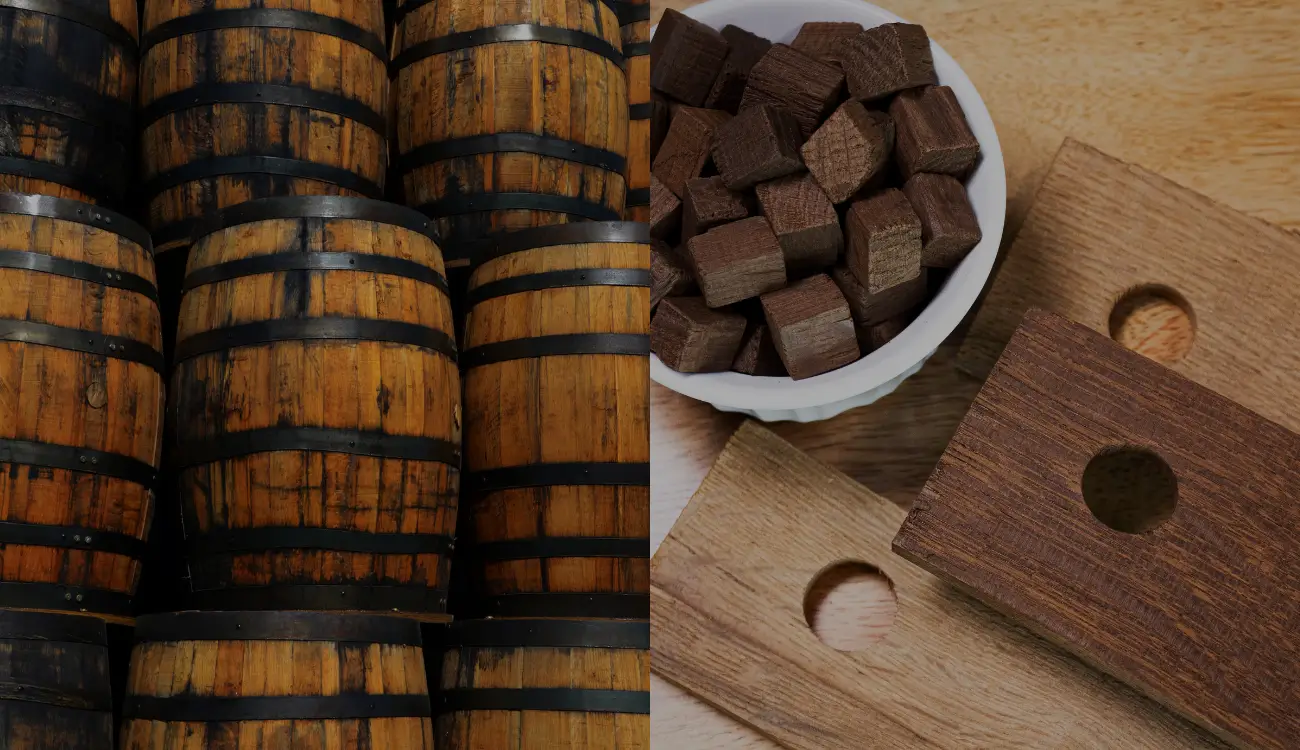
Oak barrels are large wooden vessels, traditionally made from French or American oak, used to age wine, liquor, etc., over extended periods. During barrel aging, wine slowly extracts tannins, flavors, and aromatic compounds from the wood while undergoing micro-oxygenation through the barrel staves.
Barrels are often associated with premium winemaking because they can impart complex flavors and allow wine to evolve gradually over time. However, they also come with notable considerations, including cost, storage requirements, maintenance, and variability from barrel to barrel.
What are Oak Alternatives?
Oak alternatives are products made from the same oak used in cooperage but processed into smaller formats such as chips, cubes, staves, barrel inserts, and powders. These alternatives are designed to deliver oak influence more efficiently and with greater precision.
Instead of relying on a single vessel to perform multiple roles, oak alternatives allow winemakers to target specific outcomes—whether that’s enhancing aroma, softening tannins, improving mouthfeel, or stabilizing color. They can be added during fermentation, aging, or blending, making them adaptable across a wide range of winemaking styles.
Explore our oak alternatives today!
Get started on your next batch of wine and age with the best using our premium American or French oak alternatives.
Comparing the Two
Flavor & Aroma Development
Oak barrels introduce flavor gradually, often producing layered complexity over long aging periods. However, the influence can vary depending on barrel age, origin, and previous use.
Alternatives provide more predictable and adjustable flavor. Winemakers can select specific oak types and toast levels to achieve precise results, from subtle vanilla and spice to bold roasted or smoky notes.
Control & Consistency
One of the biggest advantages of oak alternatives is control. Barrels can behave differently from one to the next, even within the same batch. This natural variation can be beneficial for blending but challenging for consistency for your winemaking.
Oak alternatives allow for repeatable results across batches. By controlling dosage, contact time, and oak type, winemakers can fine-tune oak influence with far greater precision—an important factor for both small wineries and larger producers.
Time & Efficiency
Barrel aging is a long-term commitment, often requiring months or years before wine reaches its desired profile. While this slow evolution has its benefits, it can limit production flexibility.
Alternatives extract more efficiently, allowing winemakers to achieve desired results in weeks instead of months. This doesn’t mean sacrificing quality—it simply allows for faster decision-making and greater adaptability in production schedules.
Cost & Accessibility
Oak barrels are a significant investment. Between purchase price, storage space, and maintenance, barrels can represent a substantial cost—especially for small or growing wineries.
Oak alternatives offer a cost-effective solution without compromising quality. They require minimal storage, reduce upfront investment, and allow wineries to scale production more efficiently. This accessibility has made oak alternatives increasingly popular across the industry.
Sustainability Considerations
Sustainability is becoming a growing priority in winemaking. Oak alternatives help reduce waste by maximizing the use of oak resources and minimizing the need for frequent barrel replacement. Because they allow winemakers to achieve similar results with less wood and fewer resources, oak alternatives support more environmentally conscious production practices—an important consideration for modern wineries.
So...Which is Better?
There is no single “better” option—only the right option for your winemaking goals.
- Oak barrels may be ideal for long-term aging programs, traditional styles, or wines designed for extended maturation.
- Oak alternatives are well-suited for winemakers seeking flexibility, consistency, faster turnaround, and precise control over flavor and structure.
Many wineries today use both, combining traditional barrels with oak alternatives to fine-tune profiles, enhance complexity, and maintain consistency across vintages.
Ready to age with oak?
Explore our premium oak alternatives today!
Final Thoughts
The debate between oak barrels and oak alternatives isn’t about replacing tradition—it’s about expanding possibility. Oak alternatives have become a powerful tool in modern winemaking, offering control, efficiency, and sustainability without sacrificing quality.
Whether you rely on traditional barrels, oak alternatives, or a combination of both, the key is understanding how each option contributes to your wine’s final expression. By choosing the right oak solution for your process, you can craft wines that reflect your vision with consistency.

by Brandon Haas
Published on 12/23/2025
Share Article
POPULAR POSTS
OAK ALTERNATIVES
How Long Should You Age Wine With Oak Chips?
NEWS/UPDATES
The Oak Scoop: December 2025
USING OAK IN WINEMAKING
What is Harvest and Why is it Important to Winemakers?
OAK SCIENCE
5 Ways To Make Your Alcohol Taste Better
by Brandon Haas
Published on 12/23/2025
Unsubscribe anytime. By entering your email, you agree to receive marketing emails from Oak Chips Inc. By proceeding, you agree to the Terms and Conditions and Privacy Policy.
POPULAR POSTS
OAK ALTERNATIVES
How Long Should You Age Wine With Oak Chips?
NEWS/UPDATES
The Oak Scoop: December 2025
USING OAK IN WINEMAKING
What is Harvest and Why is it Important to Winemakers?
OAK SCIENCE
5 Ways To Make Your Alcohol Taste Better
ON THIS PAGE
Age your wine with oak chips.
- Shop Now
Oak plays a critical role in shaping the flavor, aroma, structure, and aging potential of wine. For centuries, winemakers relied almost exclusively on oak barrels to introduce these characteristics. Today, however, modern winemaking has expanded to include a wide range of oak alternatives, offering new levels of control, flexibility, and efficiency.
This evolution has sparked an important question among winemakers: Are traditional oak barrels still the best option, or do oak alternatives offer a better solution? The answer depends on your goals, production scale, budget, and desired level of control.
In this article, we’ll break down the key differences between oak barrels and oak alternatives to help you determine which option is right for your winemaking process.
What are Oak Barrels?
Oak barrels are large wooden vessels, traditionally made from French or American oak, used to age wine, liquor, etc., over extended periods. During barrel aging, wine slowly extracts tannins, flavors, and aromatic compounds from the wood while undergoing micro-oxygenation through the barrel staves.
Barrels are often associated with premium winemaking because they can impart complex flavors and allow wine to evolve gradually over time. However, they also come with notable considerations, including cost, storage requirements, maintenance, and variability from barrel to barrel.
What are Oak Alternatives?
Oak alternatives are products made from the same oak used in cooperage but processed into smaller formats such as chips, cubes, staves, barrel inserts, and powders. These alternatives are designed to deliver oak influence more efficiently and with greater precision.
Instead of relying on a single vessel to perform multiple roles, oak alternatives allow winemakers to target specific outcomes—whether that’s enhancing aroma, softening tannins, improving mouthfeel, or stabilizing color. They can be added during fermentation, aging, or blending, making them adaptable across a wide range of winemaking styles.
Explore our oak alternatives today!
Get started on your next batch of wine and age with the best using our premium American or French oak alternatives.
Comparing the Two
Flavor & Aroma Development
Oak barrels introduce flavor gradually, often producing layered complexity over long aging periods. However, the influence can vary depending on barrel age, origin, and previous use.
Alternatives provide more predictable and adjustable flavor. Winemakers can select specific oak types and toast levels to achieve precise results, from subtle vanilla and spice to bold roasted or smoky notes.
Control & Consistency
One of the biggest advantages of oak alternatives is control. Barrels can behave differently from one to the next, even within the same batch. This natural variation can be beneficial for blending but challenging for consistency for your winemaking.
Oak alternatives allow for repeatable results across batches. By controlling dosage, contact time, and oak type, winemakers can fine-tune oak influence with far greater precision—an important factor for both small wineries and larger producers.
Time & Efficiency
Barrel aging is a long-term commitment, often requiring months or years before wine reaches its desired profile. While this slow evolution has its benefits, it can limit production flexibility.
Alternatives extract more efficiently, allowing winemakers to achieve desired results in weeks instead of months. This doesn’t mean sacrificing quality—it simply allows for faster decision-making and greater adaptability in production schedules.
Cost & Accessibility
Oak barrels are a significant investment. Between purchase price, storage space, and maintenance, barrels can represent a substantial cost—especially for small or growing wineries.
Oak alternatives offer a cost-effective solution without compromising quality. They require minimal storage, reduce upfront investment, and allow wineries to scale production more efficiently. This accessibility has made oak alternatives increasingly popular across the industry.
Sustainability Considerations
Sustainability is becoming a growing priority in winemaking. Oak alternatives help reduce waste by maximizing the use of oak resources and minimizing the need for frequent barrel replacement. Because they allow winemakers to achieve similar results with less wood and fewer resources, oak alternatives support more environmentally conscious production practices—an important consideration for modern wineries.
So...Which is Better?
There is no single “better” option—only the right option for your winemaking goals.
- Oak barrels may be ideal for long-term aging programs, traditional styles, or wines designed for extended maturation.
- Oak alternatives are well-suited for winemakers seeking flexibility, consistency, faster turnaround, and precise control over flavor and structure.
Many wineries today use both, combining traditional barrels with oak alternatives to fine-tune profiles, enhance complexity, and maintain consistency across vintages.
Ready to age with oak?
Explore our premium oak alternatives today!
Final Thoughts
The debate between oak barrels and oak alternatives isn’t about replacing tradition—it’s about expanding possibility. Oak alternatives have become a powerful tool in modern winemaking, offering control, efficiency, and sustainability without sacrificing quality.
Whether you rely on traditional barrels, oak alternatives, or a combination of both, the key is understanding how each option contributes to your wine’s final expression. By choosing the right oak solution for your process, you can craft wines that reflect your vision with consistency.
by Brandon Haas
Published on 12/23/2025
Share Article